


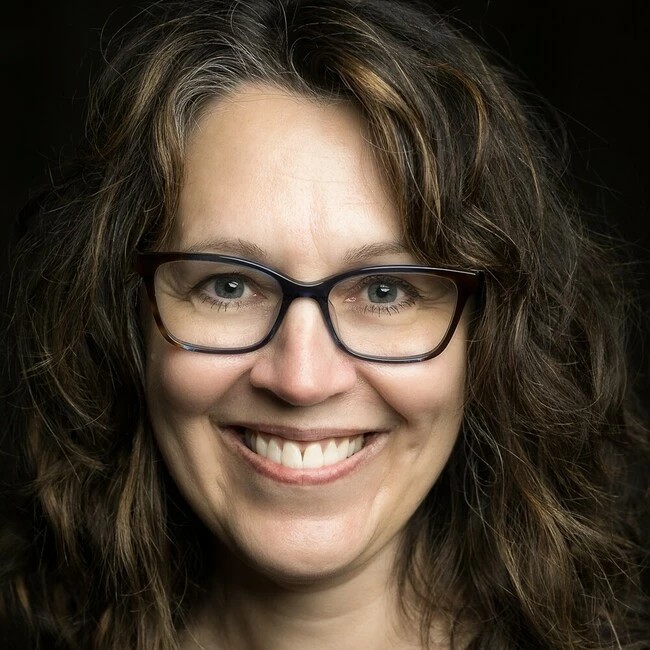
“The single hero who saves the world is a colonial construct,” says Chantal Bilodeau
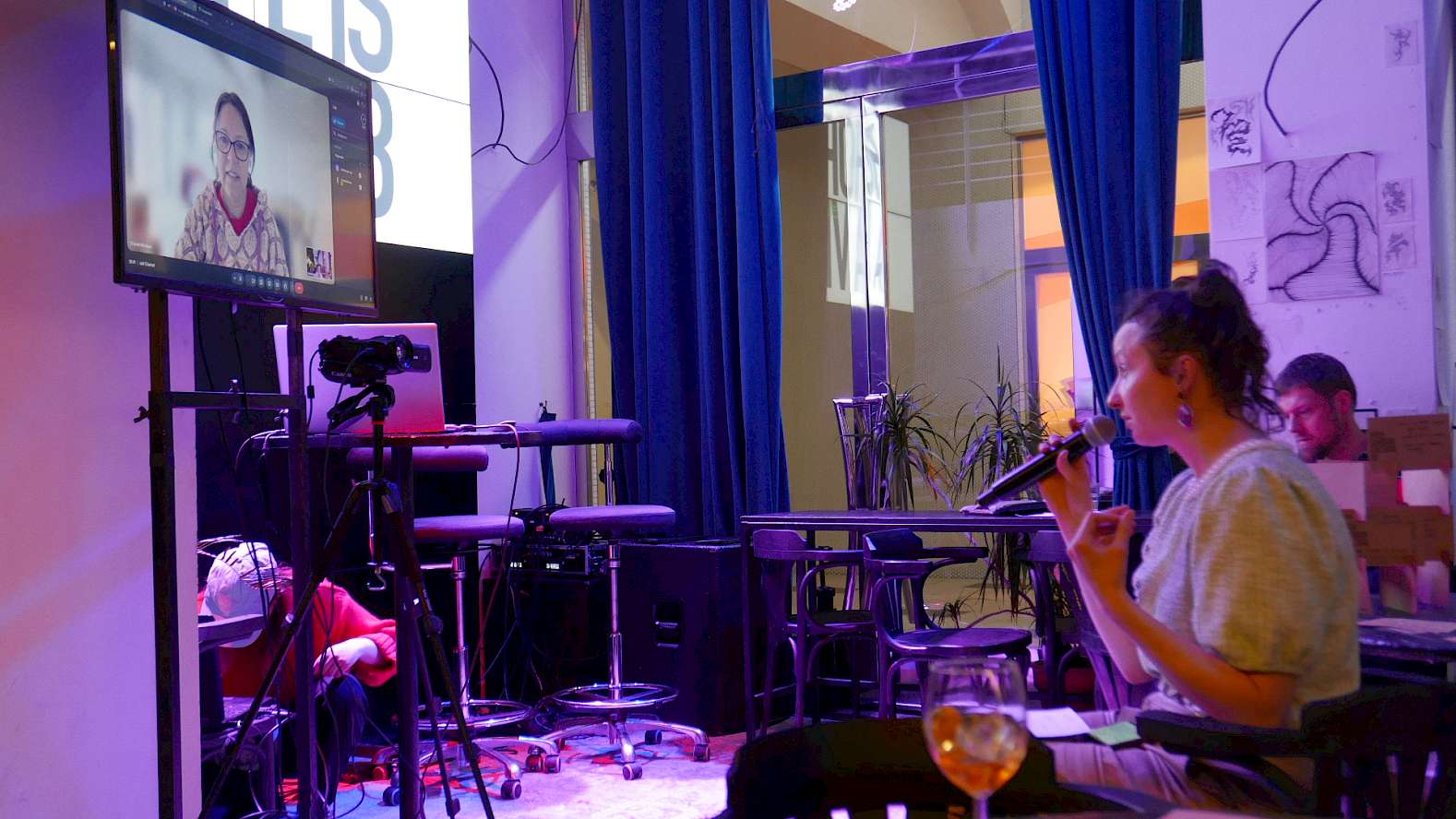
The Czech audience had the opportunity to meet playwright and translator Chantal Bilodeau on April 22 at the symposium, “How to Make Theater Today in the Context of the Climate Crisis? | Stories of Change.” The second part of the event, which took place in the evening at ARCHA+’s III. Space, began with a video conference featuring Bilodeau’s lecture, Rehearsing a Desirable Future. It provided the framework for the evening, which also included a discussion on the (un)sustainability of Czech independent and state-funded theatres.
Chantal Bilodeau is originally from Montreal, Canada, but currently lives in Victoria, Canada (that is, on the traditional territory of the xʷsepsəm or Kosapsum (Esquimalt) Nation and Songhees Nation). She is the founder and artistic director of the Arts & Climate Initiative, whose goal is to inspire a diverse audience“to address pressing social and environmental issues in novel ways using art as a catalyst.”
The symposium focused primarily on the Climate Change Theatre Action platform, which she also co-founded. Thanks to this initiative, six editions of a global CCTA theatre festival have taken place. Czech audiences can discover some of their translations thanks to a dramaturgy seminar led by Milo Juráni at Masaryk University in Brno.
For each of the six editions of Climate Change Theatre Action (CCTA), fifty five-minute plays addressing the climate crisis were written by playwrights from around the world. These were subsequently staged by various companies on every continent. What did a typical edition of your festival look like? And what was its timeframe?
Up until now, the festival has been held every two years, primarily because it takes us that long to put it together. Typically, we choose the theme, select the 50 playwrights, and commission the plays in the fall prior to the festival year. For example, for the 2025 festival, that would have been fall 2024. The plays are due a few months later and by April, we make them available to collaborators so they can start planning their event. From April to September, we try to get the word out so as many people as possible participate. The festival takes place between September and December. After the festival wraps up, we collect feedback and photos from all the events and update our website. That takes us to about March and then it’s time to start planning for the next festival.
I imagine finding collaborators for such a large-scale project must have been challenging. How did you build a network around the project? Did it involve in-person meetings, or did everything take place online?
When we launched the project in 2015, we were four co-organizers: three artists in the United States and one in Canada. Between us, we were connected to an extensive network of local and international theatremakers, so we drew from that network to assemble 50 playwrights and about 80 collaborators who presented events in their countries. In subsequent years, the three other artists moved on and I started collaborating with the Centre for Sustainable Practice in the Arts (CSPA), which also has an extensive international network. At the end of every festival, I ask the playwrights to recommend someone they feel would be a good match, so we kept extending our playwright network through recommendations. To find collaborators to organize events, we relied on word-of-mouth and publicity through the usual channels: newsletters and social media. Some years we also hosted online meet-ups. There was never an in-person meeting that brought everyone together.
One of the things that drew me to the CCTA project is that it has a global dimension, just like the climate crisis. To what extent did you, as CCTA, have an overview of everything that was happening within the project? Did a grey area emerge regarding artistic activities that your festival initiated but were, in fact, organised by local theatre groups?
We are in contact with everyone who organizes an event. Collaborators are asked to provide details, including date, location and which CCTA plays they are performing, so we can feature their event on our website and on social media. Once their event has taken place, we ask for feedback and photos for our records. Our goal is to give collaborators as much autonomy as possible. They must include at least one of the plays from our collection, but other than that, the event can take whatever shape they like. For example, they can include local artists, music, exhibitions, etc. Or they can simply sit in a backyard with a group of friends and read the plays to each other. Our role is not to impose a particular aesthetic or level of production on people but to invite them to create events that represent who they are and their community.
Do you have any idea whether any of the events you initiated continued to develop artistically after the festival ended? Have you noticed any follow-up activities?
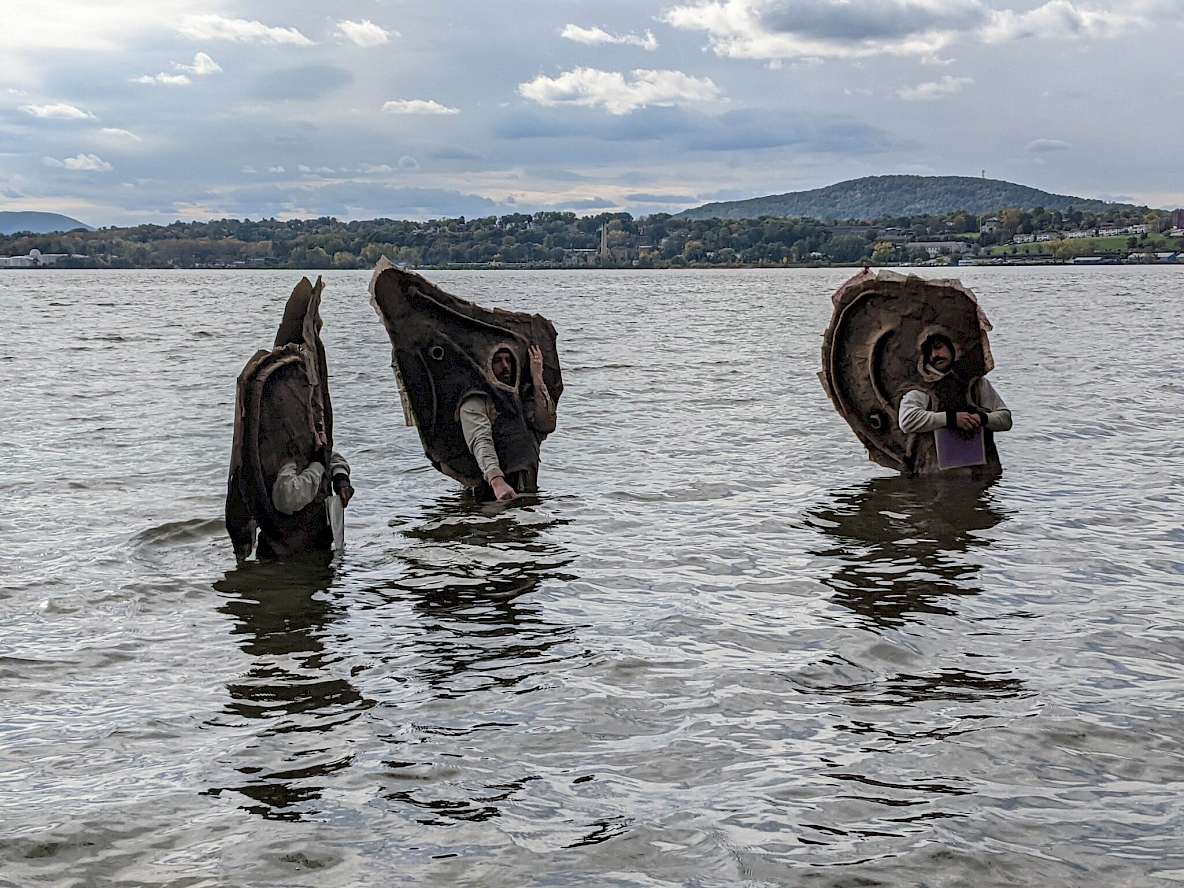
There have been several follow-up activities throughout the years. Sometimes the shows have been remounted in a different location or have toured local high schools. Sometimes the artists were asked to present the show as part of an event, like a festival or a conference. In one case, someone who organized a CCTA went on to found an organization dedicated entirely to environmental art. And in many cases, people who organize a CCTA event one year continue to participate in subsequent years, often developing collaborations with other artists or organizations in their region.
Over the course of the CCTA festival’s six editions, you’ve also organized many activist events on different continents—that was one of the conditions for participation, if I understand correctly. I’m really curious to hear about the variety of these events. Which ones stand out most in your memory?
We call them “actions” and there have been so many wonderful ones! A group in India organized a river clean-up. Students in Florida gave native seeds to people to plant in their gardens. Several groups invited audiences to sign letters demanding better climate policies, which they mailed to their local representatives. Often, groups will invite local environmental organizations to talk about what they are doing and explain how people can get involved. A group in California raised money for a tree-planting initiative. Another group in New Zealand held a march demanding better climate policies. And there have been events where the performers were young people who wanted their voices to be heard. So, one of the goals of the performance, attended mostly by their parents, was for them, the generation that is inheriting the problem, to educate the adults about what their community can do.
The CCTA website says that CCTA is planning to change its operating model. What prompted this?
The change was prompted by a lack of funding. We used to commission 50 new plays every two years, but we’re no longer in a position to do that financially. Instead, we will commission fewer plays and feature some of the plays in our now vast collection (around 275 plays). We will also encourage people to organize events year-round instead of only in the fall. We lose the compressed model, but we make it easier for people to participate and for us to run the festival.
In your experience, under what circumstances are people willing and able to open up to environmental topics?
As a general rule, people don’t want to be told what to do or feel like they are being manipulated to feel or act a certain way, which is sometimes what happens with climate communication. People are most likely to open up in spaces where they feel their point of view is respected and they are free to form their own opinion. I always try to remind myself that on the most basic level, everyone wants to feel seen and heard. Art is a great way to foster conversations about environmental topics. When it’s well done, art — including theatre — invites reflection. Instead of telling people, “this is what you should do” or “you’re to blame,” art says, “what do you think?” or “what do you value?” And “how can we make change together?” At a live performance, because the audience is watching characters make decisions, the play also asks, “what would you do if you were that character?”
The website for the Arts & Climate Initiative platform, which you lead as artistic director, states that you aim to reach audiences from all walks of life and that you take an interdisciplinary approach. What do the artistic events organized through your initiative look like?
We have had to curtail our programming over the last two years due to funding cuts, but in the past, we have collaborated with various organizations in New York City, enabling us to reach a diverse audience. From an African-Caribbean to a Hispanic centre, and from a cabaret space to a city park, we try to meet people where they are. Our events have included performances, panel conversations, online classes, a fellowship for members of a community that was impacted by Hurricane Sandy and an annual five-day intensive workshop called the Arts & Climate Incubator that brings together artists, activists, scientists, students and educators who want to engage or further their engagement with climate change through artistic practices. These incubators have taken place in New York, Colorado and Alaska. We also collaborate with people who approach the climate crisis from different perspectives, including scientists, activists, policymakers, urban planners, etc.
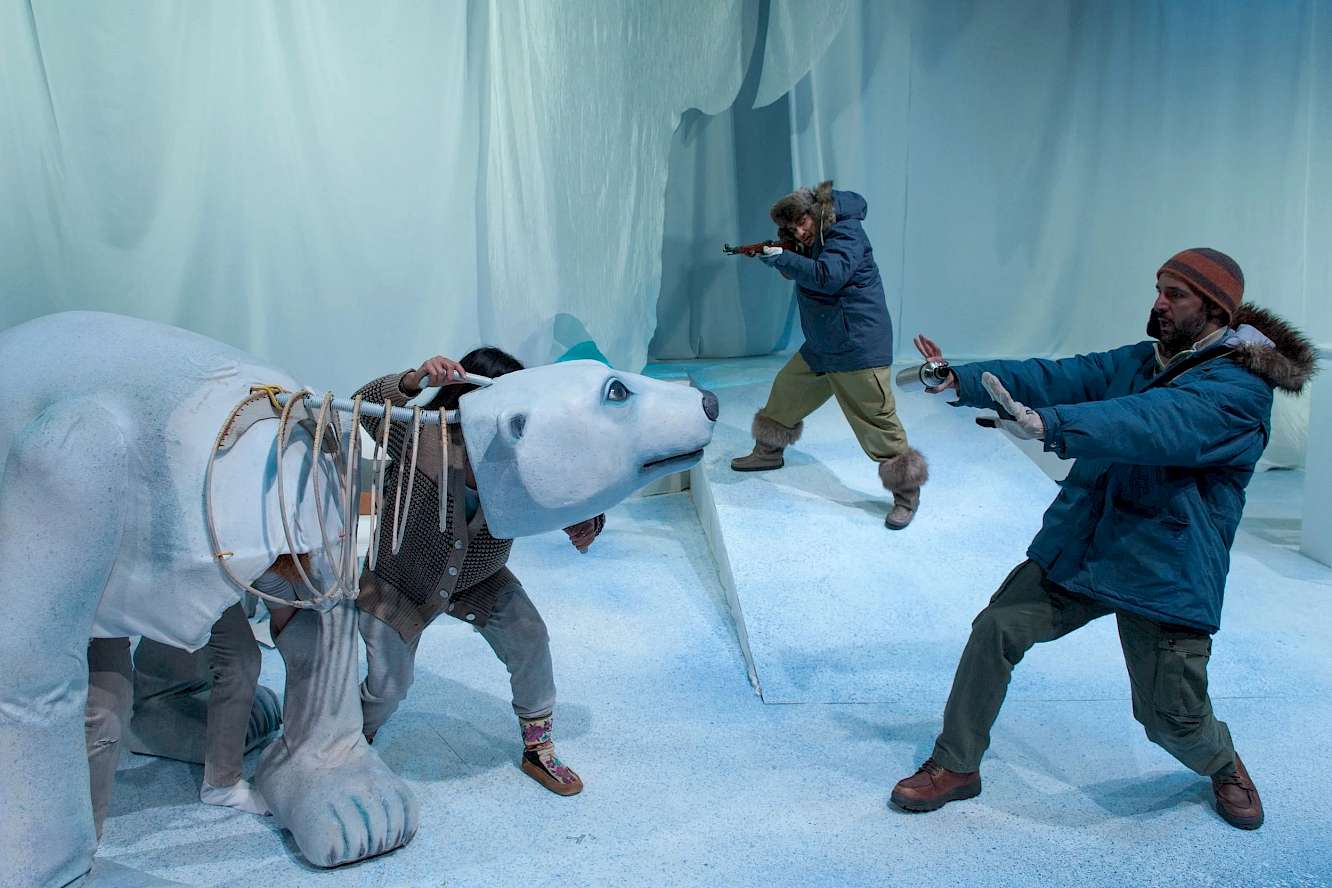
You are currently working on the dramatic series The Arctic Cycle, which is set to include eight plays, each linked to one of the eight Arctic states. If I understand correctly, you’ve been working on it since 2007, and the fourth — Icelandic — text, Requiem for a Glacier, is currently in the works. Do you observe your own evolution in relation to climate change in these texts? Do you now approach the selection of themes and your writing style fundamentally differently than you did in the beginning?
My approach to writing about the impact of climate change has definitely evolved, though I wouldn’t say it’s radically different. I think the most radical reorganizing of my thoughts happened when I did the research for the first play, Sila, set in Canada. (The word “sila” comes from the Inuktitut language spoken by Inuit, the inhabitants of Canada’s North. It can mean breath, air, atmosphere, sky, wisdom, spirit, earth.) After visiting Nunavut in the Canadian Arctic, I realized that the classic dramatic structure I had been taught wasn’t useful in capturing today’s world and the realities of the climate crisis. The idea that one character must overcome a series of obstacles, leading to a cathartic moment at the end is, in fact, an embodiment of the problems we are facing. The single hero who represents a single moral point of view and ultimately saves the day is a colonial construct that assumes that only one (Western) worldview is valid, that progress happens through force (whether moral, political, economic, etc.) rather than collaboration, and that individual self-fulfillment is the most important project one can pursue. Each play, starting with Sila, has therefore been an exploration of form in an effort to embody different values such as complexity, interconnectedness, collaboration, non-linearity and the possibility of different worldviews existing at the same time.
This said, with Sila, because it was my first time writing about the climate crisis, I felt it was important to include some science. In fact, the first two plays of The Arctic Cycle series feature a climate scientist. But eventually, as public awareness grew and I realized that it’s more important to understand how climate change is impacting us than how it is explained scientifically, I moved away from wanting to include science and instead focused on the emotional and spiritual impacts of the crisis.
What is the play Requiem for a Glacier about? Did you encounter any creative challenges while writing that you had to overcome in a creative way?
Requiem for a Glacier is inspired by an event that took place in Iceland. In 2014, a local glaciologist declared Okjökull (“Ok Glacier”) dead. A glacier is alive as long as it can move under its own weight. When the ice fails to replenish at the top and the glacier stops moving, it is considered dead. The news was covered by the media but received little attention. Then in 2019, two anthropologists from Rice University, in collaboration with the Icelandic community, organized a memorial for the glacier. A hundred people, including the prime minister at the time, hiked halfway up the mountain. They gave speeches, sang songs, and installed a bronze plaque to commemorate Okjökull. The memorial was covered by the media but unlike the news about the glacier’s death, this time it went viral. My play is inspired by this event and, as the title suggests, is itself a memorial for the glacier that audiences can participate in.
I’m still in the early stages of writing, so I may encounter challenges I haven’t anticipated yet. My goal is to create something that is emotionally impactful and allows us to grieve for what we are losing but without dwelling in that place. In other words, though I am dealing with something sad, I want the play to ultimately be uplifting. We lost this particular glacier but there are plenty of others we can still save. And perhaps another artistic challenge is to take people on a journey that goes all the way back to deep time and ends in the present. That’s a lot of territory to cover!
A major theme in contemporary theatre culture is “forced” ecological behaviour due to a lack of funding. In the Czech independent theatre, for example, most set designs are created from used materials, since creative teams don’t have the money for new ones. Do you also have experience with some of the principles of environmentally responsible behaviour being applied in your community more out of necessity than by free choice? If so, what kind?
The same thing also happens in New York, where small companies have no budget for sets and props and make do with what they find. However, what is also true is that there is no storage. Small companies don’t have their own office, let alone a theatre. Since they must rent a theatre for a production, they have nowhere to store materials before or after the show. So other than someone volunteering to store set pieces and props in their tiny apartment, out of necessity, these things often end up in landfills. On the positive side though, small companies use a lot less materials than larger ones.
Is there any official infrastructure in your environment that would facilitate environmentally responsible behaviour among theatre groups?
In New York City, there is an organization called Material for the Arts, where artists can get free materials. These are all things that have been donated. Once they are done with a show, say, artists can then donate these materials back to Material for the Arts for someone else to use, as well as anything else they don’t need. It’s a great way to keep things out of landfills.
New York is also home to the Broadway Green Alliance, which tends to serve larger theatres but has a number of free resources on their website for anyone interested in making theatre more sustainable.
Would you share with us your experiences with works of art (of any type) that have recently caught your attention?
A recent performance (which I saw three times!) that I still think about regularly is [MORNING//MOURNING] by American composer Gelsey Bell. A loose adaptation of Alan Weisman’s book The World Without Us, the piece is incredibly beautiful and gave me both an intense sense of grief as well as a sense of hope. This is how it is described on Bell’s website:
An experimental opera inhabits a world in which all humans have disappeared from Earth. An ensemble of five vocalist/multi-instrumentalists witness and guide the audience through the changes on Earth as forests grow back, new species evolve, and the human-made world erodes away. The piece is a fantastical and playful exploration into the dire political and ethical contradictions that structure current human relations with nature.
The interview was led by Barbora Etlíková.

